Methamphetamine is a potent and illegal stimulant drug. This dangerous drug increases central nervous system (CNS) activity, causing a range of side effects. Meth is highly addictive, and people may develop dependence on it in a short period.
This article will detail how to identify methamphetamine. You will learn:
What methamphetamine looks, tastes, and smells like
The effects and risks of meth abuse
What to expect in meth addiction treatment
Where to find comprehensive treatment and recovery support programs
[/vc_column_text][vc_column_text css=””]If you or someone you love struggles with meth abuse or addiction, you are not alone. Contact the Moving Mountains Recovery specialists to learn about our programs or to schedule an intake appointment. [/vc_column_text][vc_column_text css=””]
What is Meth?
Methamphetamine (meth) is a potent, illicit stimulant drug. People make meth using a process that involves combining chemicals and over-the-counter medicines. It is dangerous to make and use meth.
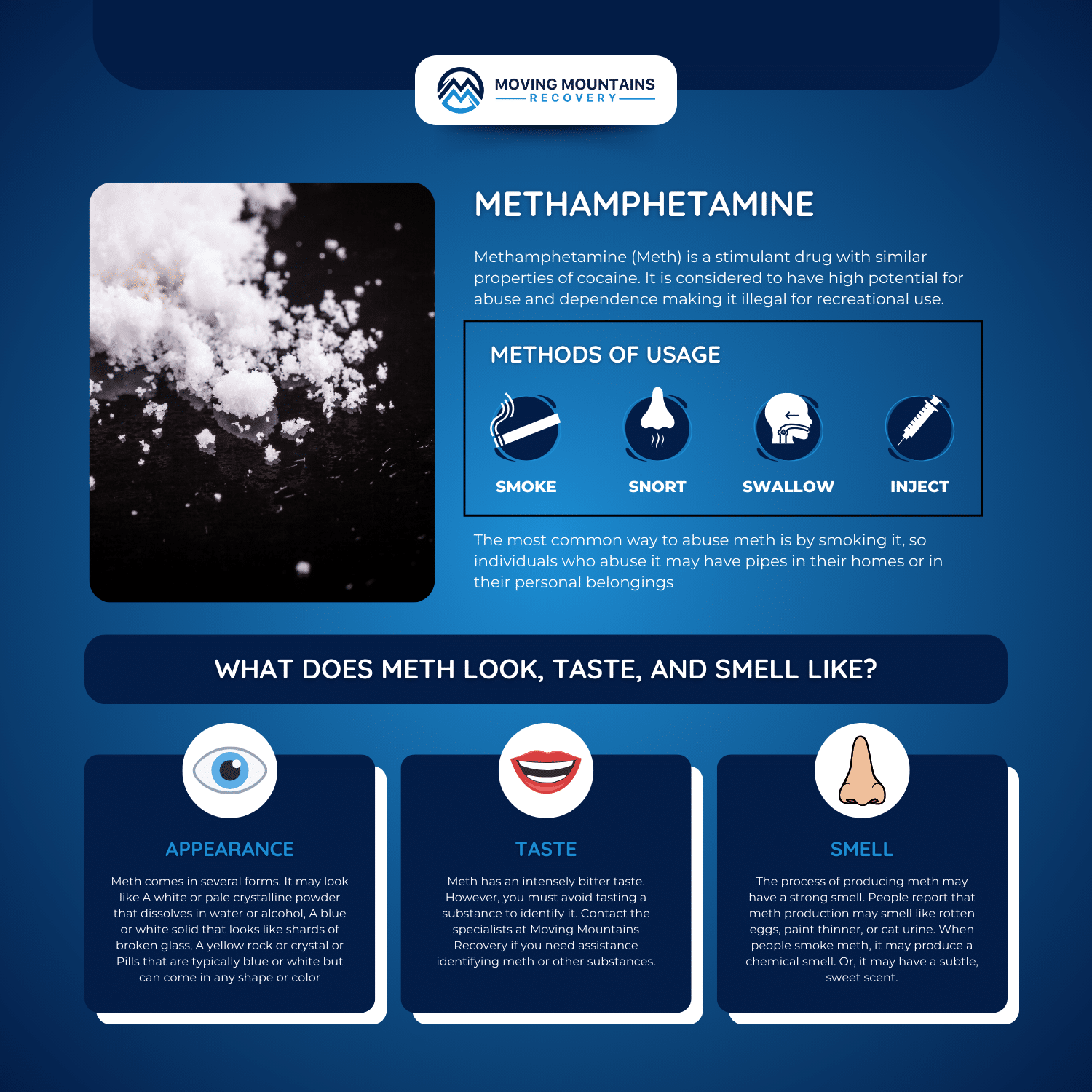
There are several forms of meth, including white powdered meth. Users may snort this crystalline powder form of the drug. Meth is also found in a bluish-white solid called crystal meth. Users may heat the solid and inhale the vapors with a glass pipe or aluminum foil. People may also dissolve and inject powdered or solid meth.
Whether someone snorts, smokes, or injects meth, the results can be hazardous. People may have life-threatening short and long-term effects. Many people who abuse meth develop an addiction to it.
People who abuse meth need comprehensive treatment to address the physical, behavioral, and psychological aspects of addiction.
Is it Meth? A Methamphetamine Identification Gude
Knowing how to identify meth may help you recognize meth abuse and seek treatment. Here is a quick guide on how to identify meth.
What does meth look like?
Meth comes in several forms. It may look like:
A white or pale crystalline powder that dissolves in water or alcohol
A blue or white solid that looks like shards of broken glass
A yellow rock or crystal
Pills that are typically blue or white but can come in any shape or color
[/vc_column_text][vc_column_text css=””]You may also find paraphernalia related to meth use, including baggies, glass pipes, straws, rolled-up paper, or pieces of foil.
What does meth taste like?
Meth has an intensely bitter taste. However, you must avoid tasting a substance to identify it. Contact the specialists at Moving Mountains Recovery if you need assistance identifying meth or other substances.
What does meth smell like?
The process of producing meth may have a strong smell. People report that meth production may smell like rotten eggs, paint thinner, or cat urine.
When people smoke meth, it may produce a chemical smell. Or, it may have a subtle, sweet scent.
If you need help identifying methamphetamine or other substances, contact the Moving Mountains Recovery specialists for assistance.
The Effects and Risks of Meth Abuse
People may begin using meth for a variety of reasons. They may be curious about its effects or want to fit in with others. Even casual meth abuse can be hazardous, and it is important to seek treatment as soon as you recognize a problem.
Methamphetamine is a potent stimulant drug. It increases central nervous system (CNS) activity and causes chemical changes in the brain, resulting in a range of side effects. These include:
Euphoria
More energy
Elevated heart rate and blood pressure
Appetite loss
[/vc_column_text][vc_column_text css=””]People may experience dangerous short-term effects, including:
Hallucinations
Delusions
Aggression
Violent behaviors
Confusion
Loss of coordination
Mood swings
Anxiety
Depression
Paranoia
[/vc_column_text][vc_column_text css=””]People who abuse meth may develop serious long-term effects. Some of the psychological and physical signs of meth addiction include:
Extreme weight loss
Lung damage and breathing issues
Severe dental decay (meth mouth)
Higher risk of sexually transmitted infections (STIs)
[/vc_column_text][vc_column_text css=””]It is essential to recognize and treat meth abuse as quickly as possible. Without treatment, people may face severe, even life-threatening consequences.
What to Expect in Meth Addiction Treatment
Substance use disorder (SUD) is a complex condition. People who develop meth addiction require comprehensive treatment to overcome the physical, emotional, and behavioral aspects of substance abuse.
Treatment for meth addiction typically includes:
A medically-supported detox program (medications, emotional support, holistic care, supervision) to manage withdrawal safely
Behavioral therapies
Mental health treatment
Individual, group, and family counseling
Relapse prevention education
Holistic therapies to support overall health, including nutrition support, exercise, mindfulness, and nature therapy
Aftercare planning and support
[/vc_column_text][vc_column_text css=””]Many people begin their recoveries in an inpatient treatment program before transitioning into outpatient care.
Meth is highly addictive, and most people with meth addiction require intensive treatment to stop using it. People may also require significant ongoing support to avoid relapse.
Find Treatment Now
Overcoming meth addiction can be challenging, but having the right support and treatment makes it possible. If you or someone you love struggles with meth abuse or addiction, you are not alone. Find comprehensive treatment and support at Moving Mountains Recovery. Contact our intake team to learn about our programs or schedule an appointment. [/vc_column_text][vc_tta_accordion section_title_tag=”p” gap=”2″ c_icon=”chevron” active_section=”0″][vc_tta_section title=”References:” tab_id=”1739809235404-0afcfdf2-bea1″][vc_column_text css=””]
Substance Abuse and Mental Health Services Administration (SAMHSA): Stimulants
We have a team of experts that navigate the relationship with the insurance companies on your behalf to make sure you’re getting the highest levels of care at the least amount possible.