24/7 Help Available

Opiate Addiction Treatment Center in Randolph, NJ

Moving Mountains Recovery, based in Randolph, New Jersey, offers a comprehensive and unique approach to Recovery from Opiate Addiction.

Medically Reviewed By:

Kelly Donald, PMHNP

Opiate Addiction Treatment in Randolph, NJ

Our Opiate Addiction Treatment Program in Randolph, NJ

Opiate addiction is one of the most devastating and widespread public health issues affecting individuals and families in New Jersey. Whether stemming from prescription painkillers or illicit drugs like heroin, opiate addiction can deeply damage physical health, mental well-being, careers, and relationships. Breaking free from this form of addiction often requires more than just willpower; professional treatment is vital for a safe and successful recovery journey.

At Moving Mountains Recovery, we specialize in personalized opiate addiction treatment in Randolph, NJ, providing evidence-based care in a nurturing environment. Our programs are designed to help you regain control of your life, heal your mind and body, and build a strong foundation for lasting sobriety.

Fortunately, we offer addiction treatment programs for those suffering from addiction. Our facility provides a safe and supportive environment for individuals to receive the help they need to overcome their addiction and begin on the path toward recovery. If you’re searching for opiate addiction treatment near me, we’re here to guide you every step of the way. Whether you’re ready to seek help or simply looking for more information, we’re here to ensure you receive the support you need.
Opiate Addiction

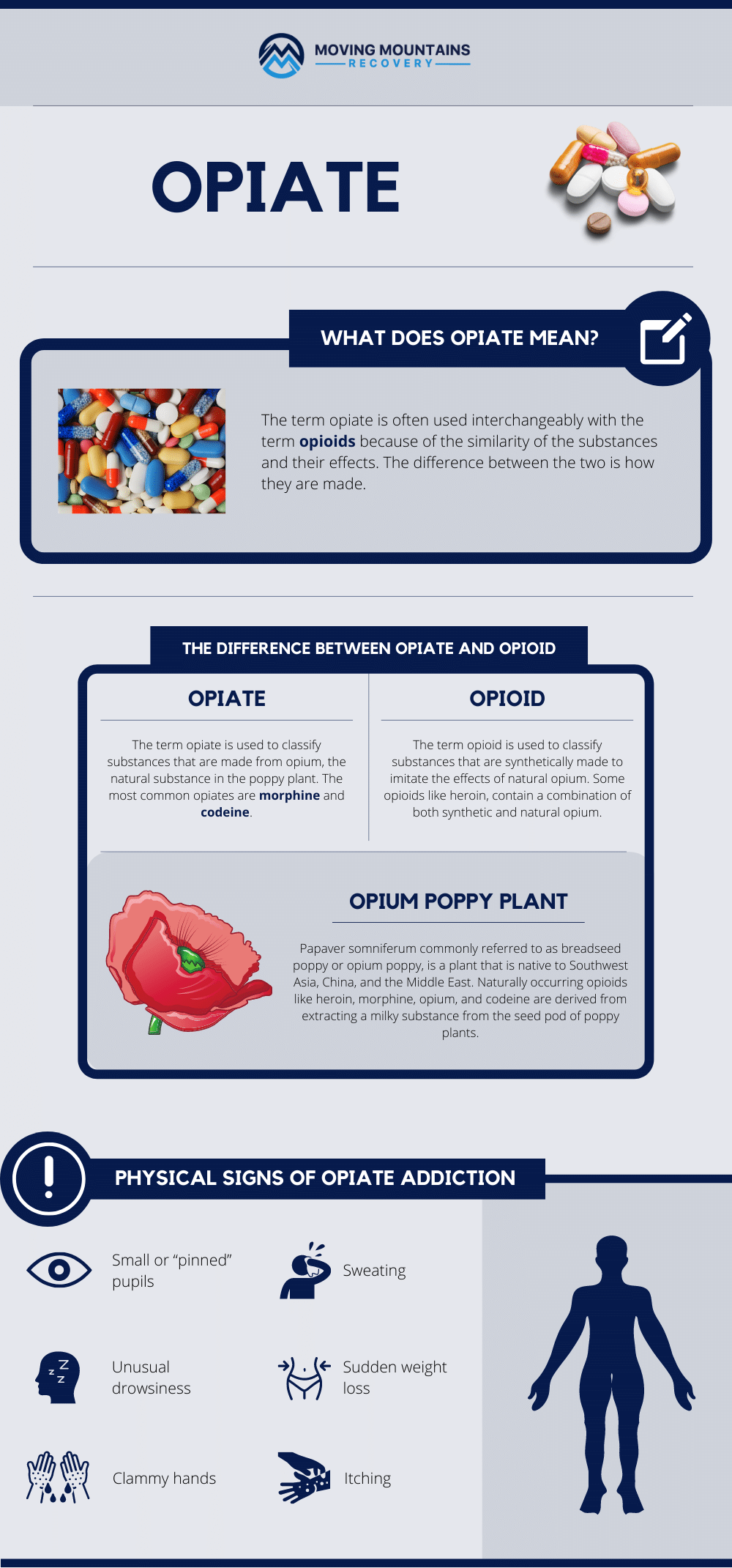
Opiates are a class of drugs that include prescription painkillers such as oxycodone, hydrocodone, morphine, and codeine, as well as illicit drugs like heroin. While opiates are effective in treating acute pain, their high potential for misuse and dependency can lead to addiction.

Over time, opiate addiction rewires the brain’s reward system. The euphoric effects of these drugs cause the brain to release high amounts of dopamine, creating feelings of pleasure and relaxation. As tolerance builds, individuals may require larger doses to maintain the same “high,” which paves the way for dependency and addiction.

Common Types of Opiate Addiction in New Jersey

Opiate addiction manifests in several forms, including:

Prescription Painkiller Addiction

Many individuals in New Jersey develop an addiction to opiate-based medications like OxyContin, Percocet, or Vicodin after being prescribed them for pain management. These medications are often misused, leading to dependence even when initially taken for valid medical conditions.

Heroin Addiction

Heroin is an illegal street drug derived from morphine, and it’s one of the most commonly abused opiates. Its intense effects and lower cost have led many prescription drug users to turn to heroin, creating a dangerous cycle of addiction.

Fentanyl Addiction

Fentanyl is a synthetic opioid that is significantly more potent than heroin, making it incredibly dangerous. Accidental overdoses involving fentanyl are on the rise across New Jersey, as it is often found laced in other drugs.

Polysubstance Opiate Addiction

Some individuals combine opiates with other substances, such as alcohol, stimulants, or benzodiazepines, which increases the risk of severe complications, including overdose and death.

No matter the type of addiction, our Randolph opioid treatment programs are designed to address your unique challenges and provide individualized pathways to recovery.


The Opioid Addiction Epidemic In The United States

The rise in opioid addiction in the United States can be attributed to several interconnected factors. One major driver has been the over-prescription of opioid pain medications by healthcare providers. Although the overall national dispensing rate of opioid prescriptions has declined from 46.8 per 100 persons in 2019 to 37.5 per 100 persons in 2023, the volume and availability of these drugs over the past two decades laid the groundwork for widespread misuse.

Another contributing factor is the widespread misconception that prescription opioids are “safe” simply because they are doctor-prescribed. In reality, when taken in high doses, for extended periods, or outside of prescribed use, opioids can lead to serious complications including respiratory depression, overdose, and death. Repeated misuse of these medications can lead to an opioid use disorder (OUD).

As prescription opioids become harder to access or more expensive on the black market, many individuals turn to cheaper and more accessible alternatives, such as heroin. According to the National Institute on Drug Abuse (NIDA), data from 2011 suggested that 4 % to 6 % of those who misused prescription opioids eventually switched to heroin, and around 80 % of people who used heroin first misused prescription opioids.

The illicit drug supply has further complicated this epidemic: heroin and other street drugs are increasingly being laced with potent synthetic opioids like Fentanyl, which are up to 100 times more potent than morphine and significantly increase the risk of overdose and death. In 2023, for example, there were 79,358 opioid-involved overdose deaths in the U.S., translating to 23.7 deaths per 100,000 population.

These statistics underline the urgency of treating opioid addiction as a complex, multifaceted public-health issue—from prescription practices to illicit supply chains and from individual misuse to systemic intervention.

Signs and Symptoms of Opiate Addiction

Recognizing the signs and symptoms of opiate addiction is essential to taking action and seeking help. Opiates affect individuals in many harmful ways, and their impact often worsens over time.

Physical Symptoms

  • Excessive drowsiness or sedation.
  • Small (pinpoint) pupils.
  • Shallow or slowed breathing.
  • Nausea, vomiting, and constipation.
  • Dramatic weight loss or loss of appetite.
  • Signs of withdrawal, such as sweating, muscle pain, insomnia, or flu-like symptoms.

Behavioral Symptoms

  • Increasingly risky behaviors, such as driving under the influence.
  • Doctor shopping or seeking opiates illegally on the street.
  • Isolating from loved ones or neglecting responsibilities.
  • Spending excessive time and money obtaining and using opiates.

Emotional Symptoms

  • Heightened anxiety or irritability, particularly during withdrawal periods.
  • Depression and feelings of hopelessness.
  • Intense cravings for opiates.
  • Emotional numbness or lack of motivation.

If you or someone you love is displaying these symptoms, seeking opiate addiction treatment near me as soon as possible can address the dangerous cycle of addiction before it worsens.

What to Expect from Opiate Addiction Treatment in Randolph, NJ

At Moving Mountains Recovery, we provide comprehensive Randolph opiate addiction treatment programs that empower individuals to overcome addiction safely and sustainably. We offer personalized care and ongoing support, ensuring that every individual has the resources they need to rebuild their lives.

Typical Treatment Methods

Each person has a unique journey and history, which is why our process begins with a thorough assessment of your needs. We’ll consider your substance use history, mental health, and recovery goals to craft a treatment plan tailored just for you.

Medically Supervised Detox

Opiate withdrawal can be incredibly uncomfortable and, in some cases, life-threatening. Our medically supervised detox ensures you can safely manage symptoms like anxiety, nausea, and cravings while stabilizing your physical health.

Evidence-Based Therapies

We incorporate leading therapeutic methods that are proven to help individuals recover from substance use, such as:


Group Therapy

Addiction recovery thrives on community and connection. During group therapy sessions, you’ll share experiences, build relationships with peers, and gain valuable support in a safe, non-judgmental setting.

Holistic Healing Activities

We believe in a whole-person approach to recovery. At the best opiate rehabs in New Jersey, we incorporate activities like yoga, guided meditation, and art therapy to help you heal emotionally and restore a sense of balance to your life.

Opiate Drug Detox

For those struggling with opiate drug abuse, it is heavily recommended to receive treatment at our drug and alcohol detox center in New Jersey. Tolerance to opiates builds quickly, requiring the user to use more of the substance each time to achieve the same effects. Due to the repeated use and higher doses, a physical dependency forms quickly, meaning that when stopping the use of the drug, the body will experience withdrawal symptoms.

Withdrawal symptoms of opioid addiction may include:


Withdrawal Symptoms of Opiates

    • Intense cravings for the drug
    • Nausea and vomiting
    • Diarrhea
    • Muscle aches and pains
    • Insomnia
    • Sweating and chills
    • Anxiety and restlessness
    • Depression and mood swings
    • Flu-like symptoms
    • Dilated pupils
    • Rapid heartbeat
    • High blood pressure
    • Loss of appetite
    • Irritability and agitation
    • Tremors or shaking
    • Difficulty concentrating or thinking clearly
    • Fatigue and lethargy
    • Increased sensitivity to pain

It is strongly recommended that once detox is completed, to continue their treatment at an inpatient or outpatient rehab.

Treatment for Opiate Drug Abuse

Moving Mountains offers a renowned opioid addiction treatment program dedicated to helping individuals recover from the powerful grip of opioid use disorder. Their team of highly trained and compassionate professionals provides evidence-based treatment programs to address the physical, emotional, and psychological aspects of addiction.

Partial Hospitalization Program (PHP)

One of the main treatment options offered at Moving Mountains is our partial care program, also known as a partial hospitalization program (PHP). This program provides intensive support and care to patients who do not require 24-hour medical supervision but still need a structured and comprehensive treatment plan. The PHP program includes daily behavioral therapy sessions, individual counseling, and medication-assisted treatment (MAT) to help individuals overcome their opiate abuse.

Intensive Outpatient Program (IOP)

Moving Mountains also offers an intensive outpatient program (IOP) for those who need less intensive care. This program allows patients to attend therapy sessions and counseling while maintaining their daily routines such as work or school. IOP provides a supportive environment for individuals to address their opiate abuse while still being able to fulfill their responsibilities.

Outpatient Program (OP)

For those who have completed PHP or IOP but still require ongoing support, Moving Mountains offers an outpatient program. This program allows individuals to continue receiving therapy and counseling on a less frequent basis as they transition back into their community and daily life. OP serves as a crucial step in relapse prevention as individuals learn to utilize the coping skills they acquired during earlier stages of treatment.

Dual-Diagnosis Treatment

Moreover, Moving Mountains recognizes that some individuals struggling with opiate abuse may also have co-occurring mental health disorders. Therefore, they offer Dual Diagnosis Treatment which addresses both addiction and mental health issues simultaneously.

This integrated approach ensures that all aspects of an individual’s well-being are considered in their recovery journey. Dual-diagnosis treatment typically involves a combination of cognitive behavioral therapy (CBT) and medication-assisted treatment (MAT).

Does Insurance Cover Opiate Abuse Treatment?

At Moving Mountains Recovery, we believe that addiction treatment should never feel out of reach due to financial concerns. Our NJ addiction recovery programs accept private PPO health insurance to make our services accessible to those who need them the most.

Using PPO Insurance for Opiate Addiction Treatment in Randolph, NJ


  1. Check Coverage: Contact your insurance provider or speak with our admissions team to verify your PPO plan covers treatment services, including detox, counseling, and therapy.
  2. Understand Benefits: Most PPO insurance plans include access to medication-assisted treatment (MAT), individual therapy, group counseling, and aftercare planning. Our team can provide detailed explanations of your coverage.
  3. Simplify Payments: The financial side of treatment shouldn’t overwhelm you. We’ll help you navigate insurance details, ensuring you understand co-pays, deductibles, and out-of-pocket costs.


If you’re unsure how to use your insurance benefits, our experts are here to make the process stress-free so you can focus on what’s truly important—your recovery.

Call MMR Today to Overcome Opiate Addiction in Randolph, NJ

At Moving Mountains Recovery, we understand how serious opioid addiction is. We are passionate about helping people find freedom from their addiction and rebuild their lives on a strong foundation of recovery. Our team of healthcare professionals is dedicated to helping people find recovery. We are ready to answer any questions about opioid addiction and help where we can. Contact us today!

Request a Callback

First Name:(Required)
Last Name:(Required)
Moving Mountains

A Leader in High-Quality Treatment

At Moving Mountains Recovery Center, you are more than just another number.

Insurance Can Cover Up to 100%

We Accept Most Major Insurance

We have a team of experts that navigate the relationship with the insurance companies on your behalf to make sure you’re getting the highest levels of care at the least amount possible.

Don’t see your provider?

Let's Move Mountains Together

Ready to Change Your Life?