
[vc_row][vc_column][vc_column_text css=””]
Prefer to listen? Play the audio version below:
Finding a treatment that works for opioid use disorder (OUD) isn’t always easy. Not only is OUD difficult to overcome, but everyone is unique with their own treatment needs.
For many people, an effective treatment method is medication-assisted treatment (MAT). Medication-assisted treatment or MAT involves combining therapy and counseling with medications, such as buprenorphine, to help treat addiction.
Sublocade and Suboxone are two brand-name prescription medications that contain buprenorphine, however, they are different from one another. In this article, we’ll discuss the differences between Suboxone and Sublocade. You’ll learn how each medication works, the common side effects, and the benefits.
Understanding Medication-Assisted Treatment for Opioid Addiction
Opioids are powerful drugs that affect the brain and body by binding to opioid receptors, reducing pain, and producing feelings of relaxation or euphoria. Over time, repeated opioid use can lead to physical dependence, meaning the body adapts to the drug and requires it to function normally. When someone with opioid dependence stops using, they experience withdrawal symptoms such as nausea, muscle pain, anxiety, and intense cravings.
Opioid addiction is difficult to overcome and is associated with high rates of relapse because these withdrawal symptoms can be severe, making it hard for individuals to quit on their own. This is where medication-assisted treatment (MAT) comes in.
MAT helps reduce cravings, ease withdrawal symptoms, and lower the risk of relapse. By stabilizing brain chemistry, these medications allow individuals to focus on rebuilding their lives without the constant struggle of opioid dependence.
What is Suboxone?
Suboxone is a combination medication that contains buprenorphine and naloxone. Buprenorphine works by binding to opioid receptors in the brain, reducing withdrawal symptoms and cravings.
Naloxone is an opioid antagonist that helps prevent misuse by causing withdrawal symptoms if the medication is injected instead of taken as directed.
Suboxone is typically taken daily as a sublingual film or tablet, meaning it dissolves under the tongue. People may start taking Suboxone 12-24 hours after their last dose of opioids and may continue for various lengths of time depending on their needs.
Common side effects of Suboxone include:
- Nausea and vomiting
- Headache
- Sweating
- Constipation
- Insomnia
- Mouth or throat discomfort (from the film or tablet)
 [/vc_column_text][vc_column_text css=””]
What is Sublocade?
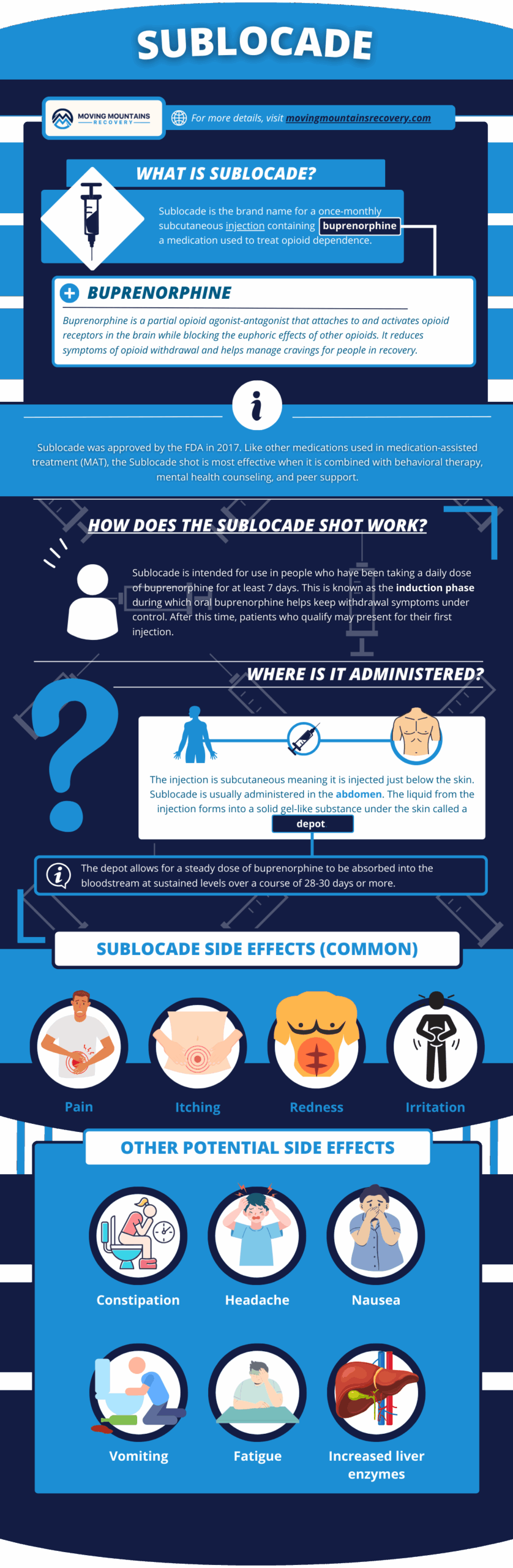
Sublocade is an extended-release injection that contains only buprenorphine. It is administered once a month by a healthcare provider and is designed for individuals who have already been stabilized on a lower dose of buprenorphine (such as Suboxone) for at least seven days.
Once injected, Sublocade forms a gel-like deposit under the skin that gradually releases buprenorphine over a 30-day period. This provides consistent medication levels without the need for daily dosing. This is beneficial for people who struggle with medication adherence.
Common side effects of Sublocade include:
- Pain, redness, or itching at the injection site
- Constipation
- Nausea
- Fatigue
- Headache
- Dizziness
 [/vc_column_text][vc_column_text css=””]
Key Differences Between Suboxone and Sublocade
While Suboxone and Sublocade are similar medications that are used to treat opioid use disorder, there are a few key differences. Both medications are effective for treating opioid use disorder, but the right choice depends on an individual’s needs, lifestyle, and treatment goals.
Method of Administration
One of the biggest differences between Suboxone and Sublocade is how they are taken. Suboxone comes in a sublingual film or tablet, which is placed under the tongue (or inside the cheek) and dissolves. It must be taken daily as prescribed by a doctor.
Sublocade, on the other hand, is an extended-release injection that is administered once a month by a healthcare professional.
Frequency of Use
Since Suboxone is taken daily, it requires individuals to remember to take their medication consistently. Some people prefer this flexibility, while others may find it difficult to stay on track with their treatment.
Sublocade eliminates the need for daily medication. Instead, individuals receive a once-a-month injection, ensuring they have a steady level of medication in their system without having to think about taking a pill or film every day.
Chemical Makeup
Suboxone contains both buprenorphine and naloxone while Sublocade contains only buprenorphine in an extended-release form. The naloxone in Suboxone helps prevent misuse of the medication, however, since Sublocade is only administered in a doctor’s office, the risk of misuse is minimal with it as well.
Side Effects
Because Sublocade is a monthly injection, some people may experience mild pain or irritation at the injection site, which is not a concern with Suboxone.
On the other hand, people often complain about the bitter, long-lasting taste that Suboxone leaves behind. Some experience a tingling or slight burning sensation while it is dissolving, as well. These side effects are not a concern with Sublocade.
Treatment Initiation
Suboxone is usually started at home or in a medical setting once mild to moderate withdrawal symptoms have begun. A doctor will typically prescribe a low dose at first, then adjust it based on the patient’s response. Since Suboxone contains naloxone, taking it too soon after opioid use can trigger withdrawal symptoms.
Sublocade requires a two-week period of stabilization on a daily buprenorphine medication, such as Suboxone, before switching to the injection. This ensures that the body is accustomed to buprenorphine and can handle the extended-release formulation of Sublocade.
The Benefits of Suboxone
Suboxone is an older medication, so people tend to be more familiar with it and more comfortable taking it. Other benefits include:
- Flexibility in dosage – Suboxone comes in various different doses, allowing for flexibility and custom dosing based on the patient’s needs.
- Ease of use – Suboxone can be prescribed by a doctor and taken home. Individuals do not have to visit their doctor for each dose nor do they have to give themselves an injection.
- The addition of naloxone – The naloxone in Suboxone helps deter substance use, so it may be a better option for people at a high risk of relapse.
[/vc_column_text][vc_column_text css=””]
The Benefits of Sublocade
As a once-monthly injection, Sublocade has different benefits, such as:
- Convenience – Individuals get their shot once a month, so they don’t have to keep up with daily medication.
- Consistent medication levels – The long-acting injection ensures that a steady dose of buprenorphine remains available in the body at all times, eliminating the fluctuations that can occur when taking a daily medication that wears off.
- Less stigma – Not having to take medication every day can help individuals feel as though they are living normal lives, reducing feelings of stigma or shame they may have about their addiction.
[/vc_column_text][vc_column_text css=””]Sublocade and Suboxone both provide unique benefits and an effective path toward recovery. It’s important to speak with your doctor to decide which medication is right for you.
Find out if MAT for Opioid Use Disorder is Right for You
If you or a loved one are struggling with opioid addiction, Moving Mountains Recovery is here for you. We offer multiple levels of care and treatment options tailored to your unique needs.
To learn more about our programs or ask questions about Sublocade and Suboxone, please reach out to our team today! The beginning of your recovery is just a phone call away.[/vc_column_text][vc_tta_accordion section_title_tag=”p” gap=”2″ c_icon=”chevron” active_section=”0″][vc_tta_section title=”References:” tab_id=”1741452975254-7d666750-8094″][vc_column_text css=””]
-
- National Institute of Health (NIH): Medication-Assisted Treatment for Opioid Use Disorder in a Rural Family Medicine Practice
- Science Direct: The impact of medication-assisted treatment for opioid use disorder on congestive heart failure outcomes
- National Institute of Health (NIH): Suboxone: Rationale, Science, Misconceptions
- JAMA Network: Buprenorphine/Naloxone vs Methadone for the Treatment of Opioid Use Disorder
[/vc_column_text][/vc_tta_section][/vc_tta_accordion][/vc_column][/vc_row]