

Prefer to listen? Play the audio version below:
In recent years, new inhalants have become very popular. One such substance is Galaxy Gas. Originally intended for industrial or culinary purposes, Galaxy Gas has entered the recreational scene and quickly gained notoriety in certain circles.
Galaxy Gas may not be as well-known by street names as other drugs. However, its growing reputation brings up an important question: what is Galaxy Gas?
This article will explore that question. It will provide a detailed look at the chemical makeup of Galaxy Gas. We will also uncover its short-term and long-term effects on the body and mind.
What Is Galaxy Gas?
Galaxy Gas is a term for an inhalant that has recently caught the attention of recreational users.
Galaxy Gas, which is colorless and odorless, often contains nitrous oxide. Nitrous oxide is well-known for its medical and industrial uses, and people also use it for its euphoric effects. In its original form, nitrous oxide is used as an anesthetic in dental procedures and for pain relief in medical settings.
It is also a common ingredient in whipped cream chargers. Its safe and regulated use is very different from its misuse for fun.
People sometimes inhale Galaxy Gas for a quick high. This high brings feelings of happiness, lightness, and a sense of being disconnected from reality. Users typically inhale the gas from small canisters or repurposed devices such as whipped cream chargers.
This legal availability, combined with minimal regulation on its sale, inadvertently contributes to its recreational abuse.
The Chemical Makeup of Galaxy Gas
Galaxy Gas mainly consists of nitrous oxide (N₂O). This gas is colorless and odorless. It is commonly used in medicine and cooking. In its legitimate applications, nitrous oxide serves as a mild anesthetic and a propellant in whipped cream chargers.
However, when repurposed for recreational use, its effects can be unpredictable and dangerous.
When you inhale nitrous oxide, also known as laughing gas, it quickly enters your bloodstream. It then reaches the brain and works by binding to opioid receptors.
This interaction releases endorphins, leading to a fleeting sense of euphoria and relaxation. Additionally, nitrous oxide interferes with the brain’s NMDA receptors, contributing to dissociative experiences and an altered perception of reality.
Trace impurities or extra chemicals may be present depending on the source. However, nitrous oxide remains the main active ingredient.
Galaxy Gas has a controlled composition, which produces a higher consistency than other inhalants, such as volatile solvents and aerosol sprays.
This doesn’t make it any safer. Its quick onset and risk of low oxygen can raise the chance of accidents and long-term brain damage. This makes it a very dangerous substance when misused, just like many other recreational drugs.
Dangers of Using Galaxy Gas
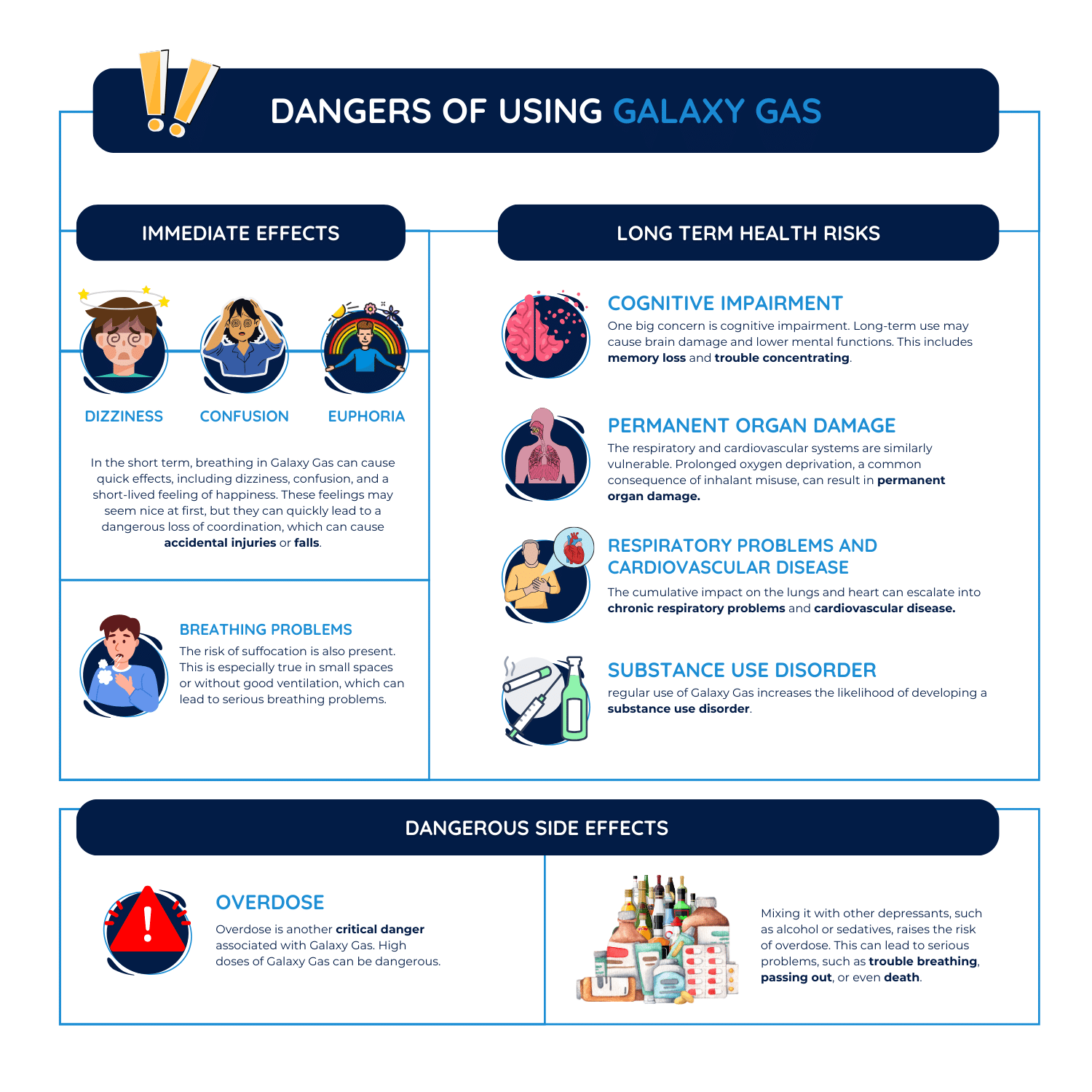 While Galaxy Gas may offer a fleeting sense of euphoria, it comes with significant risks.
In the short term, breathing in Galaxy Gas can cause quick effects, including dizziness, confusion, and a short-lived feeling of happiness. These feelings may seem nice at first, but they can quickly lead to a dangerous loss of coordination, which can cause accidental injuries or falls.
The risk of suffocation is also present. This is especially true in small spaces or without good ventilation, which can lead to serious breathing problems.
Beyond these immediate effects, the dangers of using Galaxy Gas extend into long-term health risks. Repeated exposure to this inhalant can lead to serious chronic issues.
- One big concern is cognitive impairment. Long-term use may cause brain damage and lower mental functions. This includes memory loss and trouble concentrating.
- The respiratory and cardiovascular systems are similarly vulnerable. Prolonged oxygen deprivation, a common consequence of inhalant misuse, can result in permanent organ damage.
- The cumulative impact on the lungs and heart can escalate into chronic respiratory problems and cardiovascular disease.
- Additionally, regular use of Galaxy Gas increases the likelihood of developing a substance use disorder.
As users get used to the temporary high, they may become dependent, leading to compulsive behavior and a growing need for larger doses to feel the same effect.
Overdose is another critical danger associated with Galaxy Gas. High doses of Galaxy Gas can be dangerous.
Mixing it with other depressants, such as alcohol or sedatives, raises the risk of overdose. This can lead to serious problems, such as trouble breathing, passing out, or even death.
 Effects of Galaxy Gas on the Body and Mind
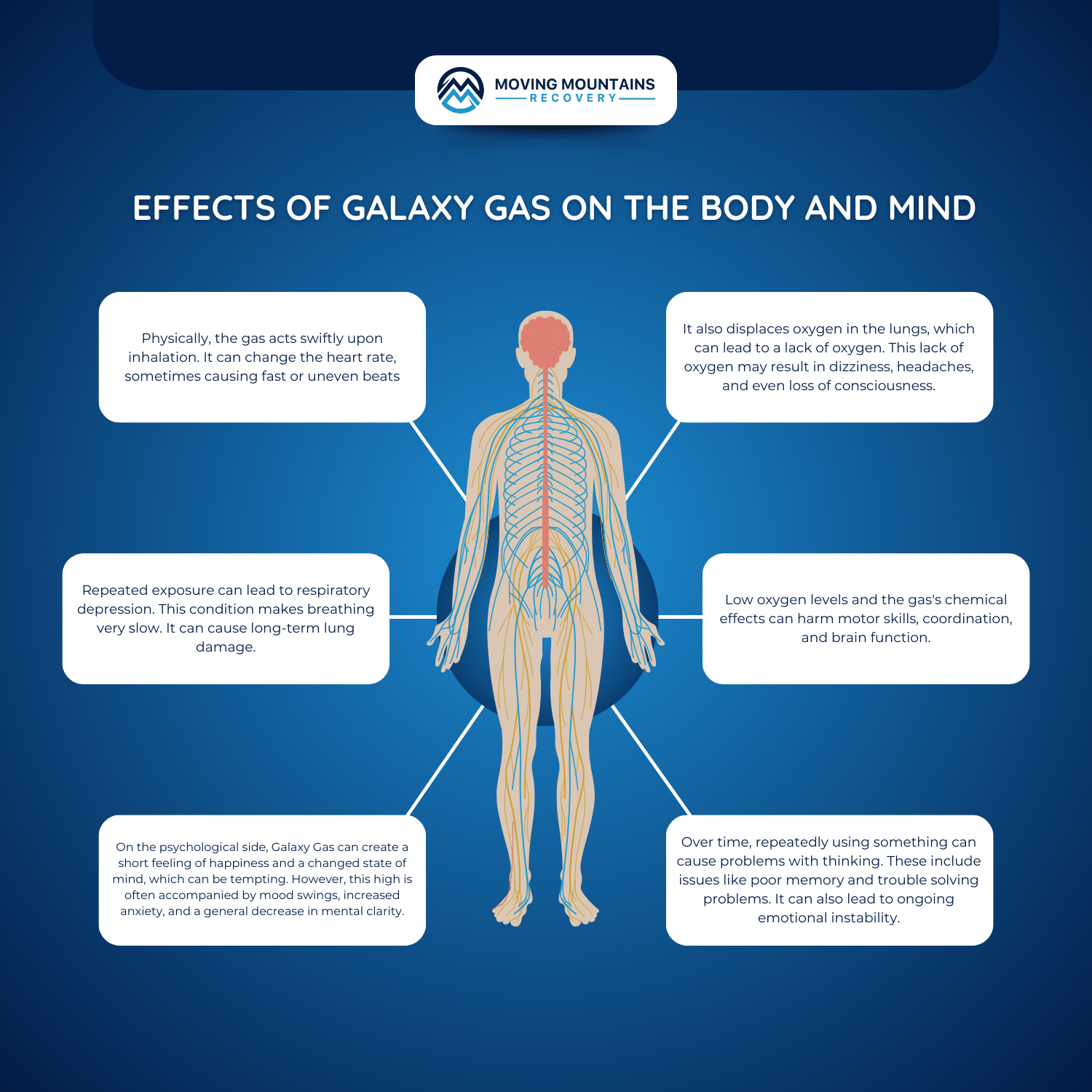 Effects of Galaxy Gas on the Body and Mind
Inhaling Galaxy Gas triggers a cascade of effects that impact both the body and the mind—immediately and over time.
- Physically, the gas acts swiftly upon inhalation. It can change the heart rate, sometimes causing fast or uneven beats.
- It also displaces oxygen in the lungs, which can lead to a lack of oxygen. This lack of oxygen may result in dizziness, headaches, and even loss of consciousness.
- Repeated exposure can lead to respiratory depression. This condition makes breathing very slow. It can cause long-term lung damage.
- Low oxygen levels and the gas’s chemical effects can harm motor skills, coordination, and brain function.
- On the psychological side, Galaxy Gas can create a short feeling of happiness and a changed state of mind, which can be tempting. However, this high is often accompanied by mood swings, increased anxiety, and a general decrease in mental clarity.
- Over time, repeatedly using something can cause problems with thinking. These include issues like poor memory and trouble solving problems. It can also lead to ongoing emotional instability.
Anecdotal evidence and emerging studies have documented cases where long-term users of Galaxy Gas have experienced irreversible neurological damage and severe psychological disturbances.
Why People Use Galaxy Gas
Its short-term pleasurable effects make it popular at parties and social events, where peer pressure and the desire to try new things are common. The idea of trying something that offers a different state of mind can be very appealing, especially for people who want to escape their daily routines.
Adding to its appeal are widespread misconceptions about its safety.
Many people think Galaxy Gas is safe because it is sold for industrial and cooking uses. They don’t see the serious risks of using it for fun.
Moreover, it’s easy accessibility and occasional misleading marketing tactics lower the barrier to experimentation, further encouraging misuse.
Recognizing Inhalant Abuse and When to Seek Help
Identifying inhalant abuse early is crucial for preventing long-term damage. Behavioral signs include a clear change in social activities. This can mean frequently missing work or school and pulling away from family events. Other signs include mood changes, irritability, and less motivation.
Physically, users may exhibit signs like slurred speech, impaired coordination, and unexplained fatigue or respiratory issues.
Early withdrawal symptoms can include anxiety, sweating, and restlessness. These signs appear when the gas is not used, showing a dependency. If these signs become persistent or escalate, friends, family members, or the users themselves should consider seeking professional help.
Treatment and Recovery Options
When it comes to overcoming inhalant abuse, a structured treatment plan is essential.
The first step usually involves detoxification under medical supervision. Healthcare professionals help manage withdrawal symptoms safely in a controlled setting. This detox phase is crucial for clearing the substance from the body and stabilizing physical health.
Following detox, various therapy options are available.
- Cognitive-behavioral therapy (CBT) helps patients identify the reasons behind their substance use.
- Group therapy and support groups offer a community of peers with similar experiences.
- Residential or inpatient rehab programs offer an immersive environment to focus on recovery without everyday distractions.
- Outpatient programs also exist for those who require flexibility while still receiving professional support.
At Moving Mountains Recovery, we provide personalized treatment plans. These plans combine different methods to help with both the physical and mental aspects of addiction.
Our approach focuses on ongoing aftercare and counseling. This ensures that everyone gets the support they need and helps them maintain long-term sobriety and regain a healthier life. Contact us today to get help!
References:
-
- National Institute of Health (NIH): Recreational nitrous oxide use: Prevalence and risks
- American Academy of Pediatrics: Inhalant Abuse
- NIH: Inhalant Use and Inhalant Use Disorders in the United States